
Understanding Wiring Accessories Prices
The cost of electrical work always seems like a mystery, doesn't it? You’re planning a home improvement project, maybe adding some recessed lighting or finally wiring that workshop in the garage, and suddenly you’re hit with the question: how much is thisreallygoing to cost?
Understanding the price of wiring accessories is crucial for accurate budgeting and avoiding unwelcome financial surprises. It’s not just about the cost of the wire itself; it’s about all the seemingly small components that add up quickly, from connectors and junction boxes to switches and outlets. Knowing the going rate for these items empowers you to make informed decisions, compare quotes from electricians, and even tackle some simple DIY projects with confidence.
Before you even start pricing individual components, get a clear idea of the scope of your project. Write down everything you need to accomplish, room by room, circuit by circuit. This list becomes your foundation for estimating both materials and labor, and helps you identify potential cost-saving opportunities early on.
Breaking Down the Costs of Common Wiring Accessories
Electrical wiring isn't just about running cable from point A to point B. It involves a whole ecosystem of accessories, each with its own function and price point. Let's look at some of the most common ones you'll encounter during home wiring projects.
Wires and Cables: The backbone of any electrical system, wires are priced by the foot or roll, with costs varying based on gauge (thickness), material (copper vs. aluminum), and insulation type (e.g., NM-B for typical indoor use, UF for underground). Copper is the standard for most residential wiring, prized for its conductivity and durability. Expect to pay more for thicker gauges required for high-amperage circuits.
Connectors and Terminals: These small but essential components create secure and reliable connections between wires. Wire connectors (like wire nuts or push-in connectors) join wires together, while terminals attach wires to devices like switches and outlets. The cost is generally low per piece, but the quantity needed can quickly add up, especially in complex wiring configurations.
Junction Boxes: These enclosures protect wire connections and provide a safe place to splice wires. They are required by code at every junction point. Plastic junction boxes are typically less expensive than metal ones, but metal boxes offer better protection and are often required in specific situations. The size and type of junction box needed will affect the price.
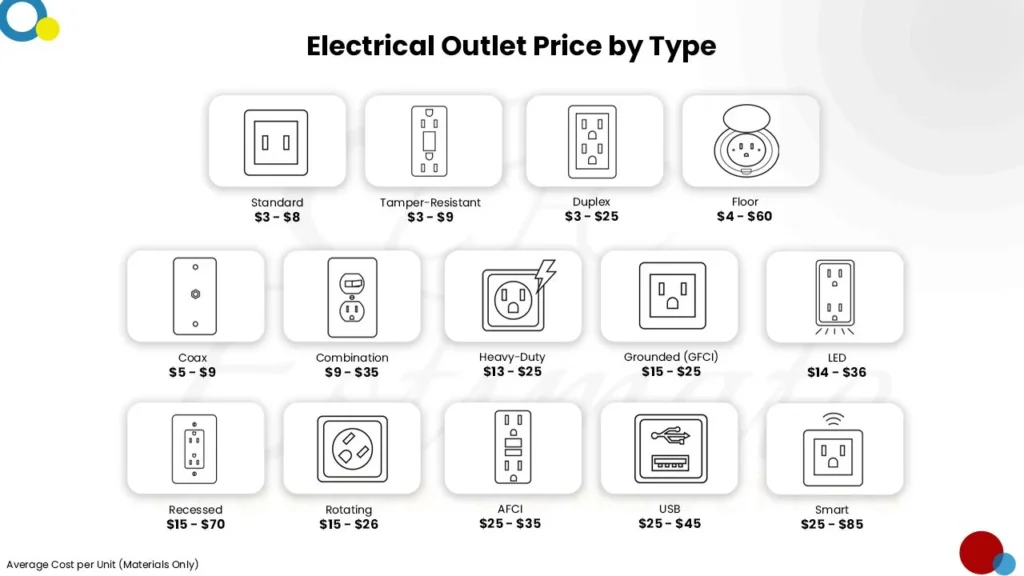
Switches and Outlets: These are the user interfaces of your electrical system, allowing you to control lights and appliances. Prices range widely based on features like dimming, smart home compatibility, and tamper-resistance. Simple toggle switches are the most affordable, while decorator-style switches and outlets offer a more modern aesthetic. GFCI (Ground Fault Circuit Interrupter) outlets, essential in bathrooms and kitchens, are significantly more expensive than standard outlets due to their built-in safety features.
Circuit Breakers: These are the unsung heroes of your electrical panel, protecting your home from overloads and short circuits. Each circuit requires a dedicated circuit breaker, and the amperage rating of the breaker must match the capacity of the wiring. Prices vary based on amperage and type (standard, AFCI, GFCI). AFCI (Arc Fault Circuit Interrupter) breakers, designed to prevent electrical fires, are becoming increasingly common in new construction and renovations, driving up the overall cost of electrical work.
Conduit: Used to protect wiring in exposed locations or underground, conduit comes in various materials like PVC, EMT (Electrical Metallic Tubing), and rigid metal conduit. PVC conduit is generally the least expensive and easiest to work with, while metal conduit offers superior protection and is often required in commercial or industrial settings.
Mounting Hardware: Don’t forget the small stuff! Staples, clamps, straps, and other mounting hardware are essential for securing wires and conduit in place. While individually inexpensive, these items are crucial for a safe and professional installation.
People Also Ask:
Are there cheaper alternatives to copper wiring? Aluminum wiring is less expensive than copper, but it's generally not recommended for residential wiring due to its lower conductivity and potential safety issues. While it was used in some homes built in the 1960s and 70s, it requires special connectors and precautions to prevent fire hazards. Copper is the preferred and safest choice for most home wiring applications.
How much does it cost to replace an electrical outlet? Replacing a standard electrical outlet is a relatively simple and inexpensive task. The cost of the outlet itself is typically a few dollars. If you hire an electrician, labor costs will vary depending on their hourly rate and the complexity of the job. Expect to pay anywhere from $50 to $150 per outlet for professional installation.
Where can I find the best prices on wiring accessories? Home improvement stores like Home Depot and Lowe's are good places to start. Electrical supply houses often offer better prices on bulk purchases and may have a wider selection of specialized items. Online retailers like Amazon can also be a convenient option, but be sure to verify the seller's reputation and ensure the products meet safety standards.
The Impact of Labor Costs on Total Wiring Installation
While the cost of wiring accessories is a significant factor, labor costs can often represent a larger portion of the total expense, especially for complex projects. The complexity of the wiring project significantly impacts the labor time and therefore, the cost. Running new circuits, installing recessed lighting, or rewiring an entire room will all require significantly more labor than simply replacing an outlet or switch. The electrician's experience and skill level also play a role. A more experienced electrician may charge a higher hourly rate, but they can often complete the work more efficiently and accurately, saving you money in the long run.
Location matters, too. Electricians in metropolitan areas generally charge higher rates than those in rural areas. The demand for electrical services and the cost of living in a particular region can influence labor costs.
Remember to factor in permits and inspections. Most electrical work requires permits from your local building department, and inspections are necessary to ensure the work meets code standards. The cost of permits and inspections can vary depending on your location and the scope of the project. Don't skip this step – it's essential for safety and legal compliance!
When comparing quotes from electricians, be sure to get a detailed breakdown of the labor costs, including the hourly rate, estimated number of hours, and any additional fees. Ask about their experience and qualifications, and check online reviews to get a sense of their reputation.
Smart Strategies for Saving Money on Wiring Projects
While electrical work isn't an area where you want to cut corners on safety, there are some legitimate ways to save money without compromising quality.
Planning ahead is key. The better you plan your project, the fewer surprises you'll encounter, and the more accurately you can estimate costs. Take the time to map out your wiring runs, identify the types and quantities of materials you'll need, and anticipate any potential challenges.
Buying in bulk can often save you money, especially on commonly used items like wire, connectors, and junction boxes. Compare prices from different suppliers to find the best deals.
Consider doing some of the simpler tasks yourself, such as running wire or installing boxes, if you're comfortable and have the necessary skills. However, always leave the actual wiring connections to a qualified electrician. Remember that certain electrical work requires licensing and permits. Always check your local regulations before attempting any DIY wiring.
Opt for energy-efficient wiring solutions. While they may have a slightly higher upfront cost, energy-efficient lighting fixtures, smart thermostats, and other energy-saving devices can help you reduce your electricity bills over the long term, offsetting the initial investment.
People Also Ask:
Is it worth it to get multiple quotes from electricians? Absolutely! Getting at least three quotes from different electricians is crucial for ensuring you're getting a fair price. Compare the quotes carefully, paying attention to the scope of work, the materials used, and the labor costs. Don't automatically choose the lowest bid, as it may indicate corner-cutting or inexperience.
How can I negotiate a better price with an electrician? Be upfront about your budget and ask if there are any ways to reduce costs without compromising safety or quality. You can also ask if they offer discounts for cash payments or if they're willing to match a lower quote from another electrician. Be respectful and professional throughout the negotiation process.
What are the common hidden costs in electrical work? Unexpected issues, such as damaged wiring or outdated electrical panels, can arise during a project, leading to additional costs. Permits and inspection fees are another potential hidden cost. Be sure to discuss these possibilities with your electrician upfront and ask for a contingency plan in case unexpected issues arise.
Prioritizing Safety in Every Wiring Project
Navigating the world of wiring accessories and installation costs can feel overwhelming. Remember that safety must always be your top priority. Electricity is dangerous, and improper wiring can lead to shocks, fires, and even death. If you're not comfortable working with electricity, or if you're unsure about any aspect of the project, don't hesitate to hire a qualified electrician.
Home wiring projects, done right, add value and convenience to your living space. By understanding the factors that influence wiring accessory prices and labor costs, you can approach your next electrical project with confidence, ensuring a safe, functional, and budget-friendly outcome. With careful planning and the right expertise, you can successfully manage your home wiring needs.
Posting Komentar untuk "Understanding Wiring Accessories Prices"